



OFF THE SHELF: JUNE 2026
VALUING SILENCE


QUAD meets Professor Kate McLoughlin (Somerville, 1988) two days ahead of the official publication on 26 March of Silence: A Literary History. The comparatively terse title belies the magnitude of the subject and its treatment, running to nearly 700 pages, or 300,000 words.
We said it ourselves in a preliminary review:
‘The core subject is British literature, the chosen chronology is 1,200 years from medieval to our own century, and the book dazzles not only for its encyclopaedic reach but its sinuous way with words.’
Of the book’s reception, which in practice will roll out across the next few weeks, she says, ‘I feel a bit nervous.’
Yet the advance praise has been a chorus of acclamation from novelists and other critics, many of whom have noted how moving the book is, and how eloquently written, despite also being in other regards encyclopaedic.
Publisher Oxford University Press says it is the ‘first-ever literary history of silence’.
An early tip about how to focus if you are an aspiring writer, and the herculean job of researching something of this scale: ‘I completely got rid of social media a few years back. It was reducing the quality of my life. I didn’t like how it made me feel.’
We agree that the attention spans of readers appear to have been reduced by exposure to social media, yet this book can be delved into by the chapter, or by the back door of the index, owing to its encyclopaedic sweep – the chapter on ‘Tongue-tied lovers, coy mistresses, unspoken desire: Sex and silence in Renaissance love poetry’ does not have to be automatically followed by Shakespeare, or preceded by medieval lullaby.
To give you an idea of the book’s majestic scope, consider that it begins with medieval literature and ends with our own century, the Anthropocene.
Asked how it all came about, Professor McLoughlin says that she was inspired by Oxford’s Diarmaid MacCulloch, Silence: A Christian History (2014), and that religion, and its secular equivalent, communion with the natural world, were the obvious wellsprings for what is now rapidly emerging as a dedicated field of enquiry, dare we call it 'silence studies'.
We briefly touch on her chapter dealing with Catholic, Anglican and Quaker silences – the last particularly emphatic because it was a post-Reformation behavioural resolution arrived at by the wandering, self-contained, Leicestershire-born George Fox, not just to pursue silence but to actually be silent. That can be read as defiance, even social insubordination. Certainly, writes McLoughlin, the group silences of the Quakers had the capacity to be ‘thoroughly annoying to others’.
‘But really it was my exploration of the nature of modernity in Veteran Poetics and my research about war writing in Authoring War, that launched it, because so much war writing becomes an attempt to articulate something that can’t be easily articulated.’
Some experiences, such as combat or killing or being wounded, are felt to be so extreme that they beg to be kept private.
Yet at the other extreme, she laughs: ‘there’s Uncle Albert in Only Fools and Horses, who prefaces almost every utterance with, "When I was in the war..." provoking a group eye roll.’
Deep in the book, a 17-year-old Private Albert Moren, in the 2nd Queen’s Regiment, recounts hearing the Germans singing ‘Silent Night’ during the night after the guns had fallen silent on the Western Front following the famous Christmas Truce of 1914. Everywhere the ground was covered in a thick white hoar frost. ‘I shall never forget it,’ Moren said 67 years later; ‘[i]t was one of the highlights of my life.’ In this case singing about silence within an unaccustomed silence produces a deafening double.
The 'Silent Night' example brings up the broader theme, that everything that has ever been uttered or written by humans, might otherwise have not been written or uttered. In other words that the precondition for something to be said, or to assume meaning, is in fact silence.
Then again, we agree, even if you can find the sort of desert beloved of mystics who want to be left completely alone to find God, you might be left with the ringing of your own ears or the roar of your own thoughts and inner dialogue – ‘Silence is an idea rather than experienced reality.’

Qualified as a barrister after a degree in English Language and Literature (Somerville, 1988), Professor McLoughlin returned to Oxford later for a DPhil and is now a Professor in English Literature and Tutorial Fellow at Harris Manchester College.
She references an undergraduate optional paper she teaches called ‘Silences’, adding that she asks students in the seminars to observe silences of up to four minutes, sometimes themed – friendly silence, awkward silence, stony silence – ‘you see, it’s not straightforward!’
‘Students are often a bit terrified…they want to scroll on their phones to fill the gap, and are disconcerted when they can’t. Later, they say they learned from it.’
She also devised an MSt (master's degree) option course, also called ‘Silences’, in which the group must respond to the week’s set texts with presentations that have no sounds or written words. ‘Normally they make a silent film, but one group made an art installation made out of rubbish collected from Port Meadow. I’m still hoping for some mime or dance.’
She mentions a 2015 article describing findings in which Japanese businessmen were able to tolerate silence for 8.2 seconds before feeling obliged to say something. American businessmen lasted just 4.6 seconds. ‘There is a cultural geography of silence, and how it is processed.’
Accustomed to seeking silence herself, Professor McLoughlin says she even approached a community of nuns during the research for the book, hoping to visit, but ‘they proved elusive’. We discuss how silence can be ‘high’ or ‘low’ quality, frequently hijacked by the ‘monkey mind’ going off all over the place, one of the greatest themes of world religion and other forms of meditation (she adds, ‘I believe in sacredness but I don’t have religious faith’).
McLoughlin perfectly quotes Hamlet Act 2 Scene 2: ‘O God, I could be bounded in a nutshell and count myself a king of infinite space, were it not that I have bad dreams.’
Recognising that Professor McLoughlin had a successful career as a government policy lawyer, before returning to academia, does she offer career advice to other Oxford alumni wanting a big change of direction?
She felt, as a student, a responsibility to be ‘useful’, reasoning that if she pursued the law she would still be working with words, which, for her, was much preferable to accountancy.
‘I was successful in a Civil Service competition that paid for my conversion course to law, which I took at City University, London, and my Bar Finals.’
She remembers taking the dread test where you have to nail a sequence of dominoes, proving your logical reasoning. Seven years followed working for the Government Legal Service, with stints at the European Commission in Brussels and Conseil d’Etat in Paris.
However, her love of English literature reasserted itself. One day she happened to drop into St James’ Church in central London as an orchestra rehearsed, and observed a cellist who seemed completely free and creatively engaged. ‘I thought, I want that…’
As an aside, ‘I went to a specialist music school, but that was a strange one – I felt tone-deaf amidst the pitch-perfect.’ Music is definitely in her mix however, and she holds a diploma in piano performance from the Royal College of Music.
Professor McLoughlin says, ‘I suppose looking back, I was at the dreamy, imaginative end of the legal studies spectrum but the analytical, scientific end of the English literature spectrum.’
Literature won the tug-of-war and she came back to it with conviction, taking up posts at the University of Glasgow and Birkbeck, University of London, before returning to Oxford.
Silence is dedicated to the former President of Wolfson College and Virginia Woolf scholar, Professor Dame Hermione Lee, whom Kate says read every chapter of the draft for Silence and almost hovers over her writing craft, a supplementary mind’s eye.
Kate’s advice to alumni who may feel the grit unwelcome in their chosen career oyster, is ‘to try and pursue something that you love every single day…’
It might be literature or philosophy, but recognising family or income restraints, she isn’t necessarily saying ‘follow me’. ‘Going back to academia was a bit like making a three-point turn in a oil tanker,’ she says. It was complex.
For all these reasons this book is vindication, and the legal side of Professor McLoughlin is evident as we talk, her recall and verbal precision of plots and characters, ideas and themes so acute that I have to stop scrawling and turn on the voice memo function on my phone, so as to keep up – or rather, to relinquish note taking in order that we nurture a conversation.
She says, ‘I’m fascinated by how we know that things are being said implicitly while other things are being said explicitly. Literature, I’ve come to realise, brims with silences.’
As the book progresses into the era of world wars, Silence moves considerably beyond war poets contrasting the deafening thunder of artillery with All Quiet on the Western Front.
McLoughlin turns the reader towards the numerous soldiers who wrote nothing because they were illiterate, and often drawn from the far-flung reaches of the British Empire, for example 1,096,013 people from India during the Great War alone.
What could have been uttered or written but simply was not?
‘And what’s left, really, is the rain and the mud and the empty shelves that wait for Roy’s unwritten poems.’
That is from a poem by Rachel Manley, a Cornish poet and granddaughter of Norman Manley, Premier of Jamaica. Roy was Norman’s brother, killed at Passchendaele; both brothers served in the British West Indies Regiment. The dispossessed and the silenced get a hearing too, and that field of scholarly endeavour may well be new to many alumni who matriculated before the noughties.
We are joined in the Jesus College SCR by other fellows in search of coffee so the conversation turns to the celebratory launch of the book at the end of First Week, Trinity term – where a party will be held in the same college.
From QUAD to the author – we wish the book a noisy launch followed by much debate and not too many jokes about saying so much about shutting up.
move to carousel movement controls
 Pause slideshow
move to carousel content
Pause slideshow
move to carousel content

EBOLA: WE NEED MORE THAN A VACCINE
EBOLA: WE NEED MORE THAN A VACCINE
30 YEARS OF THE THAMES PATH
30 YEARS OF THE THAMES PATH
ANOTHER WORLD
ANOTHER WORLD
SATIRE COMES TO THE SHELDONIAN
SATIRE COMES TO THE SHELDONIAN

OFF THE SHELF: MAY 2026
OFF THE SHELF: MAY 2026
THE WONDER OF BIRDS
THE WONDER OF BIRDS
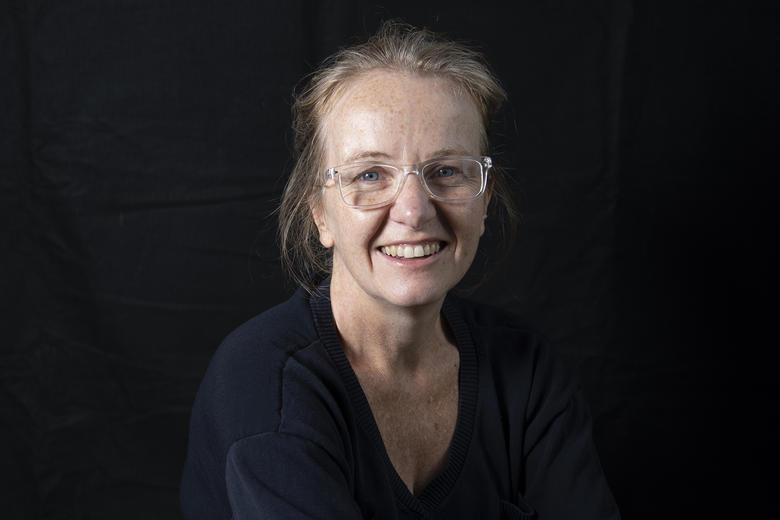
FRAN MONKS
FRAN MONKS
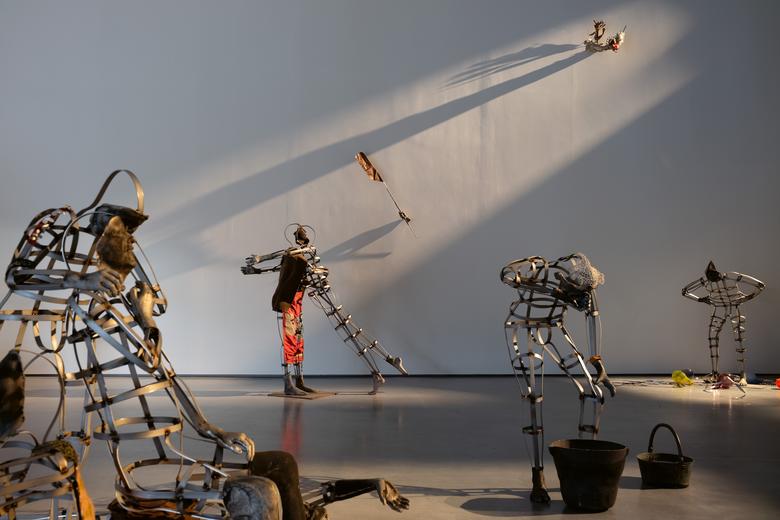
OXFORD ALUMNA NOMINATED FOR TURNER PRIZE
OXFORD ALUMNA NOMINATED FOR TURNER PRIZE

OFF THE SHELF: APRIL 2026
OFF THE SHELF: APRIL 2026
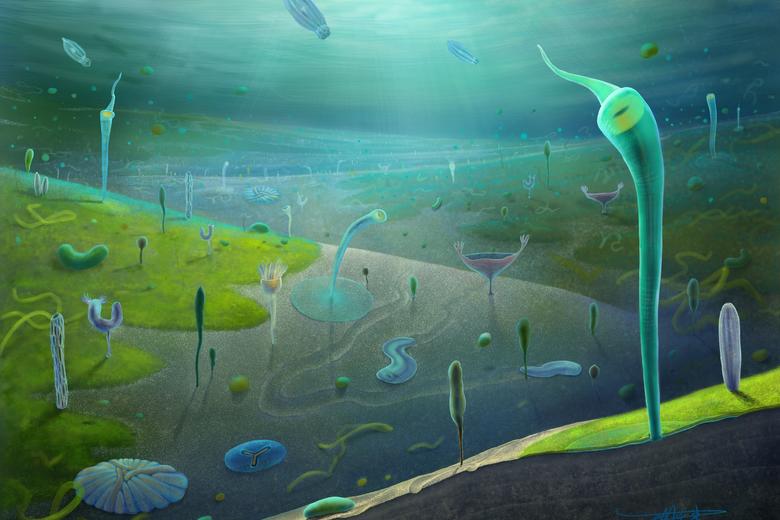
‘BIG BANG’ OF ANIMAL LIFE EARLIER THAN THOUGHT
‘BIG BANG’ OF ANIMAL LIFE EARLIER THAN THOUGHT
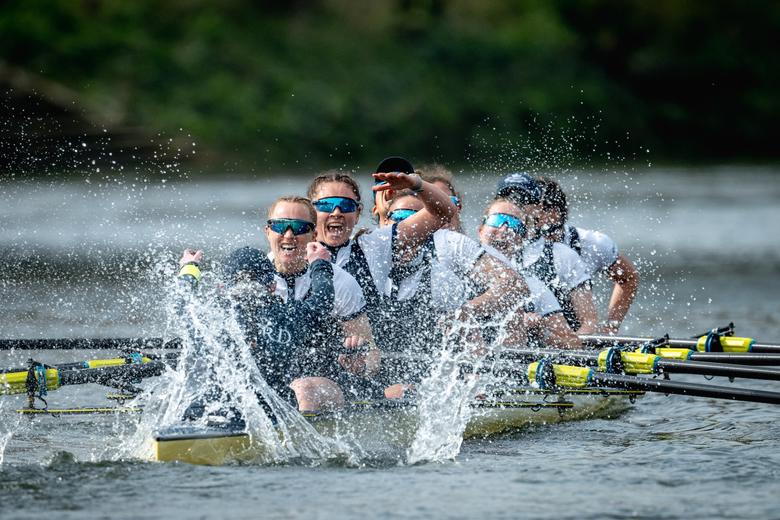
OXFORD’S WOMEN TRIUMPH IN THE BOAT RACE
OXFORD’S WOMEN TRIUMPH IN THE BOAT RACE
Pause slideshow

