

EBOLA: WE NEED MORE THAN A VACCINE
OFF THE SHELF: OCTOBER 2025
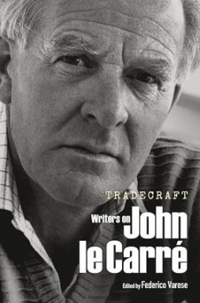
Tradecraft: Writers on John le Carré, Ed. Federico Varese (1 October 2025, Bodleian Library Publishing)
We mention this volume first because an exhibition of spy writer John le Carré’s (1931–2020; Lincoln, 1952) archive began concurrently with the book publication on 1 October and runs until 6 April 2026. It is free to all in the Weston Library on Broad Street, no ticket required. This celebration of the le Carré archive fires a starting gun on many different readings of the man and his output, and is indisputably an enormous moment. Like all great authors – Tolkien springs to mind – le Carré (real name David Cornwall) created a whole world that was simultaneously meticulously realistic and esoteric, the world of international espionage and spying, divulged in one sense yet mythologised in another. His archive came to Oxford because of the fast footwork of Bodley Librarian Richard Ovenden – to whom we say as the French would: CHAPEAU. Comprising 1,237 boxes of papers and artefacts, the archive will be a magnet for scholars to come, and they will come. The book is edited expertly by Federico Varese, who is both a professor of sociology in Paris and a senior research fellow at Nuffield, and as we learn here, a Russian mafia expert who ultimately became a co-creator with le Carré. It consists of other writers writing about le Carré, and each chapter is a gem. There is for example a remarkable chapter by exiled Russian journalist Andrei Soldatev, on how the KGB sought to utilise le Carré to their own, propagandistic purpose. There is another on the tortuous adaptation of Our Kind of Traitor to film, by Hossein Amini. These contributions have a percussive echo to each other, as we learn repeatedly how le Carré operated to flatter and then utilise creatives to his own operation. He was a formidable operator. Michela Wrong’s chapter on accompanying le Carré to the Congo is memorable and seems to go right to the heart of everything, including the darkness. The Bodleian exhibition is as beguiling as the book, reminding us just how much Lincoln College and Oxford generally shaped le Carré’s world. It was where he was recruited by the secret services, and a particular tutor inspired the character Smiley. That barely scratches the surface.
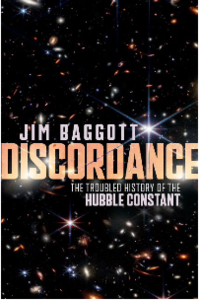
Discordance: The Troubled History of the Hubble Constant by Jim Baggott (23 October 2025, Oxford University Press)
In 1927 Georges Lemaître argued that our universe is expanding, a conclusion rendered more startling by the astronomical data that backed it up, presented two years later by Edwin Hubble. The speed of the expansion is governed by Hubble’s constant, and this volume narrates its troubled history. Running through it all is the interplay between cosmological theory and astronomical observation, and inevitably there were reversions, disputes, arguments and finally, after 2009, something of a crisis. There is meticulous history and dry humour throughout: a great book that reaches beyond professional scientists and reminds us all that knowledge and truth are subject to changes and paradigm shifts that are slow moving and then fast, like a bankruptcy, animated by personalities, by brilliance and by humour and human, all of them fallible.

The Means of Prediction: How AI Really Works (and Who Benefits) by Maximilian Kasy (2025, University of Chicago Press)
The author is Professor of Economics at Oxford, formerly of the University of Vienna and UC Berkeley, and today heads Oxford’s machine learning and economics group. Here he deftly circumvents all the more salacious stories about the future of artificial intelligence – whether it’ll spell the end of humanity, whether the data centres will melt the energy grid, whether there will be mass unemployment – to throw a loop around what ‘stuff’ is being built to create AI futures, and how this can be a tool of ‘prediction’, and the desirability of it all being part of a democratic coordination rather than evidence of spiralling inequality. He says, ‘I believe that researchers have an obligation to contribute to a society where we collectively debate and decide our own future, rather than leaving questions of technology and policy to technocrats and experts. It is in this spirit that the present book aims to participate in a broad public debate about the future of AI.’ The result is a breath of fresh air because it is grounded in the more obvious realities of society, and it goes a step further to showing just how much serious talent is being poured into the AI revolution from Oxford – not just to predict stuff but to actually lead the conversation.
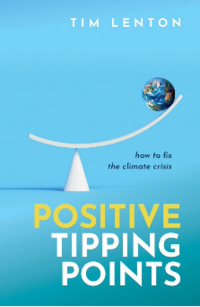
Positive Tipping Points: How to Fix the Climate Crisis by Tim Lenton (September 2025, Oxford University Press)
The author founded the Global Systems Institute at the University of Exeter, where he holds a Chair in Climate Change and Earth System Science. He is widely associated with the concept of the ‘tipping point’ but here tries to focus on the positive tipping points that are taking off, to perhaps mitigate the negative tipping points that delineate the intensification of climate change to the detriment of much life on earth.
Having discussed the negative tipping points, he reverses the narrative beginning with a captivating story about his aunt Lilian, who was a fearless suffragette nearly killed by the prison establishment through reckless force feeding – not necessarily that we want mass arson but he’s out to make a point and compares Extinction Rebellion to the 18th-century anti-slavery movement. From there to electric cars and the wider energy grid, with plenty of S-curves and other models to show how tipping points can quickly achieve social change with widespread environmental benefit. If you needed a non-hysterical reminder that we have to change quickly, this is it. But it’s a fun read too, packed with engaging and empowering narratives about pioneering humans.
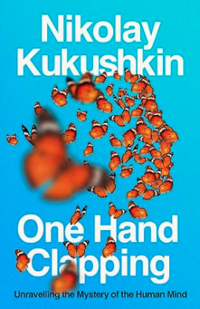
One Hand Clapping: Unravelling the Mystery of the Human Mind by Nikolay Kukushkin (23 October 2025, Swift Press)
Another incredible book hot off the press in October, One Hand Clapping takes a monumental stab at the ‘hard’ problem of philosophy that has evaded satisfactory explanation for the longest time: consciousness. If we are just chemical reactions, how do we explain the evolution of the human mind, and eventually consciousness? The author (New College, 2008) is a Russian-born neuroscientist now in New York as a research fellow at NYU’s Centre for Neural Science. He was also previously a post-doc at Harvard Medical School so has seats at several different disciplines. This wide knowledge allows him to take the reader on a billion-year journey, from the creation of DNA and the foundation of all living things, to the fact that humans’ ability to question our place in the world reveals our deepest connection to nature, rather than its opposite. Most of the critics who have already read the manuscript begin their appraisal with a vocabulary with words like ‘dazzling’ and ‘breathtaking’. We think that possibly the theologians would see themselves here too with recurring echoes drawn from a variety of religious traditions – ‘in the world and not of it’ and that sort of thing.
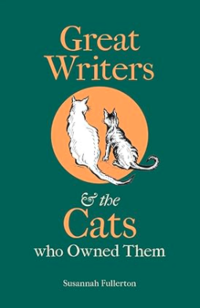
Great Writers & the Cats who Owned Them by Susannah Fullerton (16 October 2025, Bodleian Library Publishing)
This is absolutely delightful prose and neither thin and frivolous nor worthy and fastidious. It’s just a really well-crafted read that draws on great cats associated with big writers – Dr Johnson’s Hodge, Horace Walpole’s Selima, Robert Southey’s Rumpelstilzchen, Alexandre Dumas’ Mysouff, Edward Lear’s Foss, Charles Dickens’ Bob, Mark Twain’s Bambino, Colette’s La Chatte and half a dozen more, never forgetting Sir Winston Churchill’s Nelson, and Dorothy L Sayers’ Blitz, a rescue kitten plucked from the rubble of World War Two London. Except, and every cat owner will relate, everything is styled the other way round, the cat owning the human rather than the human owning the cat, all of them characters, muses, displaying what Boswell called their ‘contemptuous knowledge’. In some cases – arise Winston Churchill – we learn about extensive menageries where the cats were by no means the only species. Ultimately though we learn something original and unexpected about the authors, a sort of feline sidelight on a human activity. Keep your eyes peeled for November Off the Shelf where we’ll go further on this theme with a book about pets by the great Charles Foster of Exeter College, and an accompanying exhibition in Oxford...
move to carousel movement controls
 Pause slideshow
move to carousel content
Pause slideshow
move to carousel content
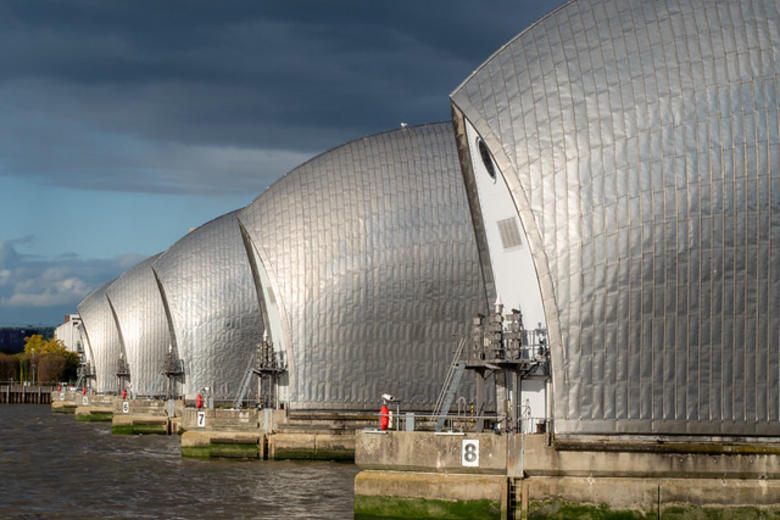
30 YEARS OF THE THAMES PATH
30 YEARS OF THE THAMES PATH
ANOTHER WORLD
ANOTHER WORLD
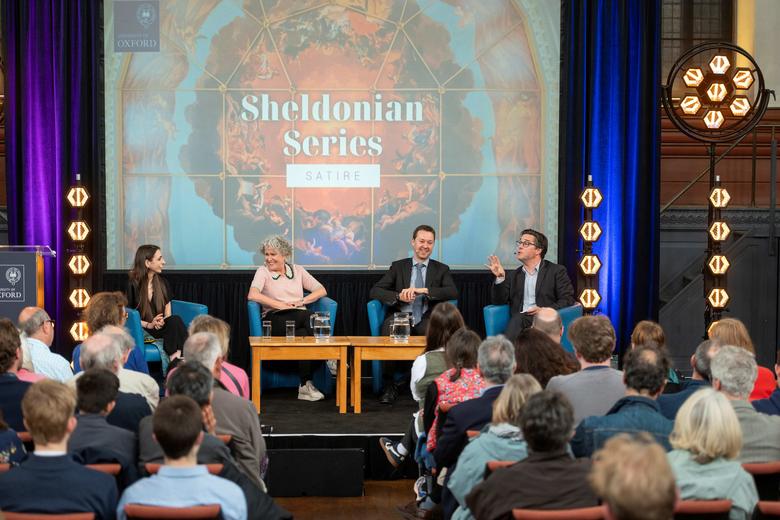
SATIRE COMES TO THE SHELDONIAN
SATIRE COMES TO THE SHELDONIAN
OFF THE SHELF: MAY 2026
OFF THE SHELF: MAY 2026
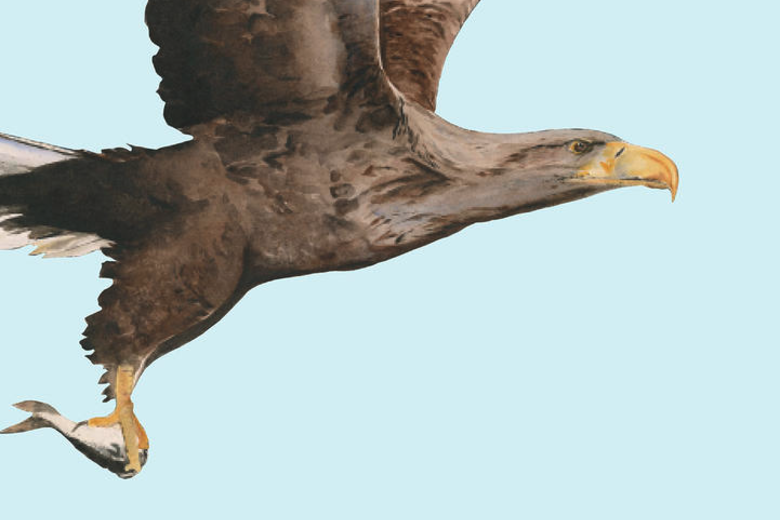
THE WONDER OF BIRDS
THE WONDER OF BIRDS
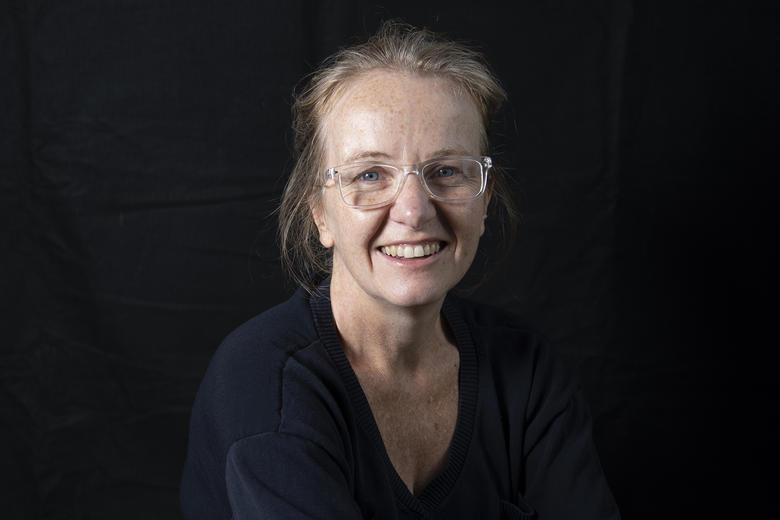
FRAN MONKS
FRAN MONKS
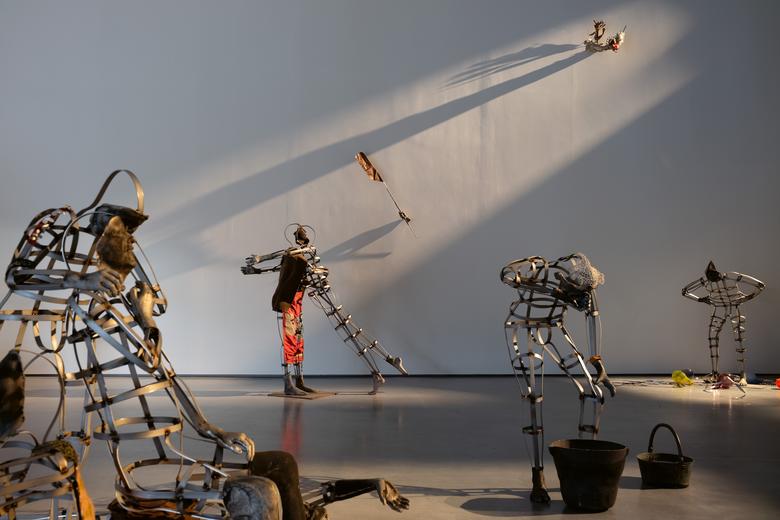
OXFORD ALUMNA NOMINATED FOR TURNER PRIZE
OXFORD ALUMNA NOMINATED FOR TURNER PRIZE
OFF THE SHELF: APRIL 2026
OFF THE SHELF: APRIL 2026

VALUING SILENCE
VALUING SILENCE
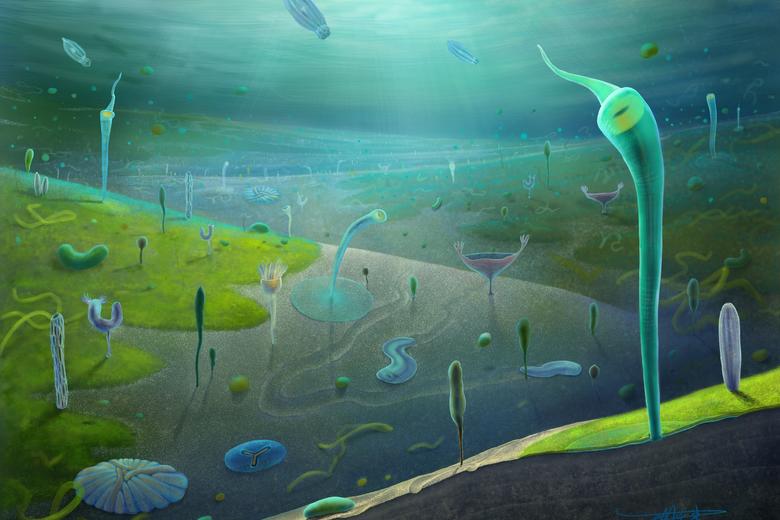
‘BIG BANG’ OF ANIMAL LIFE EARLIER THAN THOUGHT
‘BIG BANG’ OF ANIMAL LIFE EARLIER THAN THOUGHT
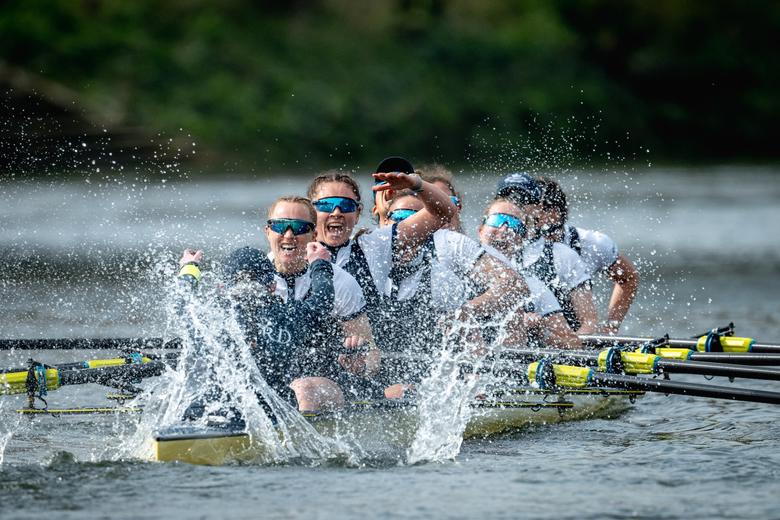
OXFORD’S WOMEN TRIUMPH IN THE BOAT RACE
OXFORD’S WOMEN TRIUMPH IN THE BOAT RACE
Pause slideshow

