
OXFORD ALUMNA NOMINATED FOR TURNER PRIZE
THROWING DOWN THE CLIMATE GAUNTLET

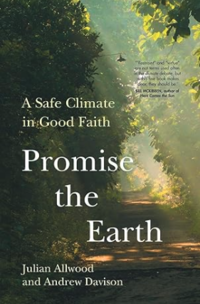
Andrew Davison (Merton, 1992) meets me at the Schwarzman Centre for the Humanities to discuss Promise the Earth: A Safe Climate in Good Faith, co-authored with Cambridge engineer Julian Allwood.
The book is highly original and devastatingly simple, all at once. The science of climate change has been crystal clear for ages, but hardly anyone has changed their behaviour and global emissions have risen.
The science has in this sense ‘failed’, and scaring people doesn’t seem to work either, producing a bunker mentality or devil-may-care attitude.
So the authors turn to hearts and minds, suggesting that we practise restraint and relearn virtue, reducing our own emissions footprints, at home and at work. Neither governments nor technology will do it for us. We must act. To do so is to be empowered.
While both authors profess Christianity, the book is not doctrinal and you don’t have to be of faith. They simply point out that all religious traditions, sports and the arts, and indeed classical ‘secular’ models for a happy life, encode personal restraint. There is more Aristotle here than Jesus.
The book intersperses chapters on the science with chapters on virtues such as ‘Courage’, ‘Prudence’, ‘Restraint’, ‘Temperance’, ‘Justice’, and only towards the end the Christian virtues of ‘Faith’, ‘Hope’ and ‘Love’.
The ‘technical’ chapters have titles such as ‘Urgency’, ‘Innovation’, ‘Cost’, ‘Action’, ‘Leadership’ and ‘Decisions’.
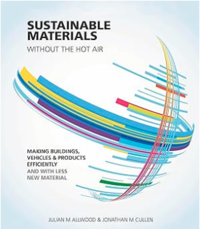
Complemented by eloquent data, the book offers readers the distilled fruit of the hugely respected work by Professor Allwood, writing then with a different co-author Jonathan M Cullen, of Sustainable Materials without the Hot Air, published in 2011 and in a revised second edition in 2015 (right).
Professor of Engineering and the Environment at the University of Cambridge, Julian has long been unflinching in his honesty about our predicament. In Sustainable Materials, he proclaimed the need for a revolution in material use, emphasising re-use and repair. Without steel, cement, paper, plastic and aluminium we wouldn’t have modern civilisation, wrote the authors, but if we double global production by 2050 as is predicted, the climate will unravel catastrophically. What to do?
The answer given here in 2026 in Promise the Earth, published in January by Cambridge University Press, is to apply ourselves individually, and seriously, to reductions and alternatives in the following categories: ‘fossil-fuel boilers, fossil-fuel cars, fossil-fuel aeroplanes, ruminant animals (which supply beef, lamb and dairy foods) and conventionally grown rice.’
These four activities – heating, driving, flying and eating – contribute about a third of emissions in the UK, say the authors. We are, as a nation, abysmally casual about flying.
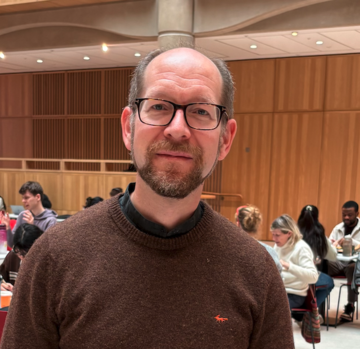
Professor Davison (left) says: ‘Julian wrote the book with his grandchildren in mind. I wrote it with my grandparents in mind. They had to deal with scarcity; they were very principled people.’
He says his maternal grandmother was ‘born into poverty’ and entered a Lancashire mill aged 14. ‘She lived completely outside of a throwaway culture,’ he adds.
Without laying it on too thickly, the book celebrates how the 1939-45 war generation pulled together and found common cause, amid imposed restraints such as rationing.
Professor Davison says: ‘Beyond meeting our material needs, happiness doesn’t come from accumulating more and more material possessions. The items we treasure we typically treasure for their sentimental value, because they invoke a person or a memory.’
‘If we cannot make the climate safe, we will soon face unimaginable suffering from food shortages,’ write the authors.
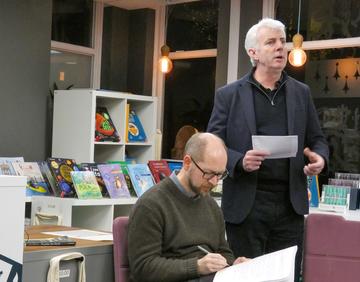
Professor Allwood (right, standing) is particularly sceptical about the likelihood of a technology ‘fix’ suddenly riding to the rescue, pointing out that the sort of technologies that are being entertained typically take several decades to implement at scale, but that Net Zero by 2050 is just 24 years away.
The UK Net Zero strategy launched in 2021, he writes, mentioned hydrogen ‘501 times in 368 pages’. There is still no zero-emissions supply of hydrogen in the UK, and it is otherwise typically made from a very energy-intensive process. There is a terrible hypocrisy, he argues, about describing an ostensibly emissions-free solution, ‘while disguising its requirement for an energy-intensive input made with emissions elsewhere’.
Professor Davison says: ‘We’ve spun ourselves a delusional fairy tale. Net Zero by 2050 will mean virtually no aviation. There are lots of options at lab scale, but none that we can scale up to match today’s demand in such a short timescale. Julian in particular does not believe in off-sets, seeing them as a form of burden shifting.’
Ditto hydrogen as a new way to make steel; ditto ‘producing cement from the ash of coal combustion’; and ditto carbon capture and storage (CCS), which has yet to reach 0.1% of global emissions despite being first commercialised in 1972, argues the book.
Consequently, the wealthy, by which the authors mean the vast majority of the likely audience for this article – the 10% not the 1% – must curtail their consumption. No one is stopping them from doing it.
Professor Allwood, via email, wrote: ‘I think the new book is precisely about your reaction to the first one [Sustainable Materials] – can we collectively accept restraint for the good of the next generation, or not. I still hope we can – not as government-led top-down policy, but as a bottom-up social movement. As you say, if not, the consequences are going to be really harsh.’
Speaking theologically, Professor Davison says: ‘I’m not a quietist. You could argue that there’s nothing we can do, or that there is a hubris in humans thinking they can fix the climate. But to say that we cannot is also dishonest. Humans caused the problem; we don’t get to wash our hands of the solutions.’
Only in his second year as Oxford University’s Regius Professor of Theology, Professor Davison originally read Chemistry at Merton, followed by a DPhil in Biochemistry. He then did two degrees in theology at Cambridge and thinks he may be the first Thomist in the post (a Thomist is someone who works in the school of Thomas Aquinas).
The zeitgeist of the book feels timely, I suggest, at a time of great ‘scandal’ and after the 2025 Reith Lectures, ‘Moral Revolution,’ delivered by Dutch historian and author Rutger Bregman, who argued for a revolution in morality and decency following their evident general collapse.
But do they really mean that there will be no flying by 2050 – surely a fanciful notion? ‘The book is there to provoke to a degree,’ Andrew replies, ‘but we are very strong on maintaining honesty. If we are legally committed to Net Zero by 2050, this is how it will look, there won’t be surplus energy for routine flights.’
The authors remind their audience that long-haul, short-stay holidays are incredibly new; there is no reason at all to consider them ‘normal’. The book points out that were aviation fuel to be taxed like petrol and diesel, the cost of a flight would quadruple.
The author of Astrobiology and Christian Doctrine, and a founding member of the Leverhulme Centre for Life in the Universe at Cambridge, Professor Davison was giving a sermon in 2016 and Professor Allwood was in the congregation. They bonded over ‘material demand reduction’, or, as Andrew translates, ‘make less stuff and use it longer’.
Addressing the economic challenge, Andrew says: ‘It sounds deflationary but to follow our path would result in huge growth in the sectors addressing our true needs. We are not demanding a collapse in growth so much as a redirection.’
One of the early reviewers of the book has noticed that its central argument implicitly calls time on the neo-Liberal idea that rational self-interest expressed as unconstrained personal consumption can fix the climate. It cannot.
Neither does the book celebrate deprivation. It’s about reevaluating priorities. To do this leads back to more human happiness, rather than less.
The thesis of the book is that personal restraint is normal, seen historically, and only the unexpected and temporary successes (and excesses) of the ‘oil era’ of human existence have permitted the illusion that we might live without limits.
We discuss the paradox of being an undergraduate. So often these formative years are remembered later as incredibly rich and happy ones, yet for very few students is money plentiful – more likely the opposite. Meanwhile the Oxbridge college system, rooted in a monastic tradition, let’s not forget, is an extraordinary example of an efficient, communal asset cherished by all its members. The message seems to be: don’t forget what made it good, bring as much of that vibe back as possible.
move to carousel movement controls
 Pause slideshow
move to carousel content
Pause slideshow
move to carousel content

OFF THE SHELF: APRIL 2026
OFF THE SHELF: APRIL 2026

VALUING SILENCE
VALUING SILENCE
‘BIG BANG’ OF ANIMAL LIFE EARLIER THAN THOUGHT
‘BIG BANG’ OF ANIMAL LIFE EARLIER THAN THOUGHT
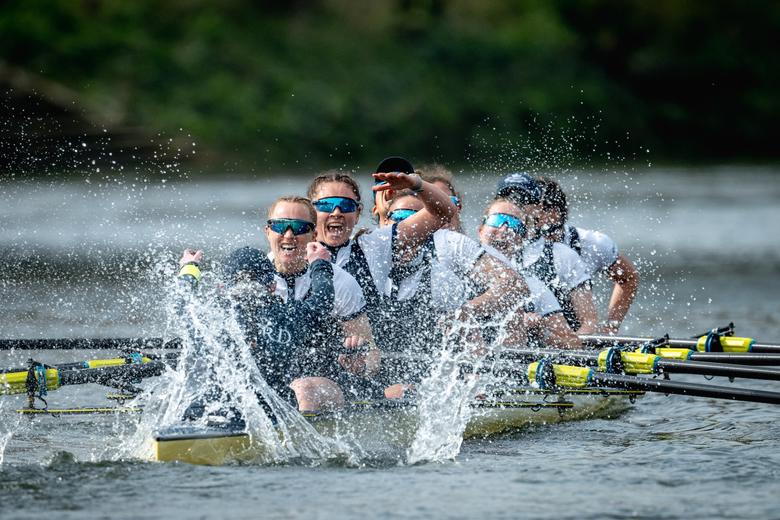
OXFORD’S WOMEN TRIUMPH IN THE BOAT RACE
OXFORD’S WOMEN TRIUMPH IN THE BOAT RACE
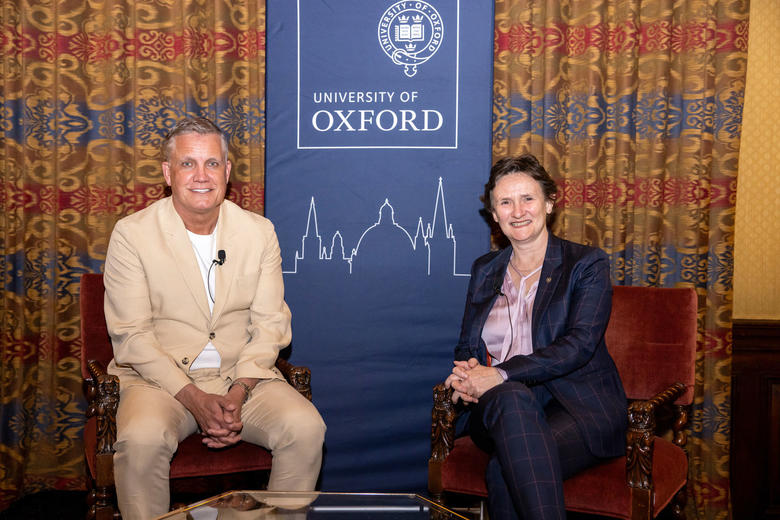
AN EVENING WITH THE VICE-CHANCELLOR IN LOS ANGELES
AN EVENING WITH THE VICE-CHANCELLOR IN LOS ANGELES
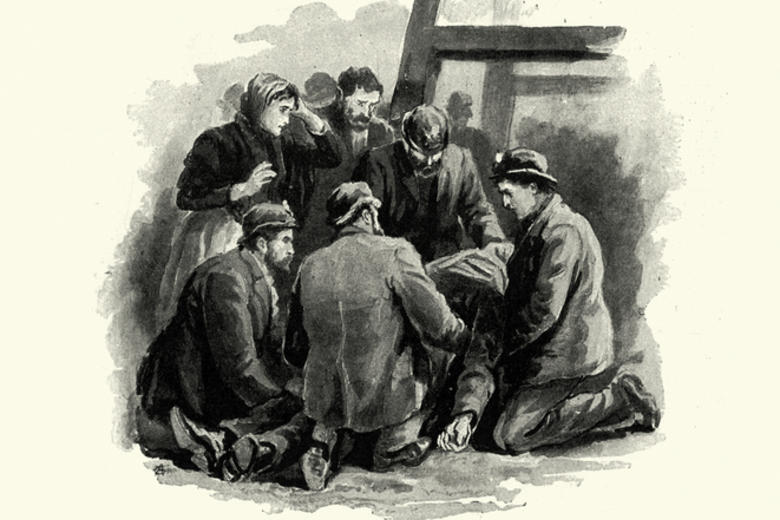
100 YEARS SINCE THE GENERAL STRIKE
100 YEARS SINCE THE GENERAL STRIKE
MAKING SPACE SUSTAINABLE
MAKING SPACE SUSTAINABLE

ASHMOLEAN BLOOMS FOR SPRING
ASHMOLEAN BLOOMS FOR SPRING
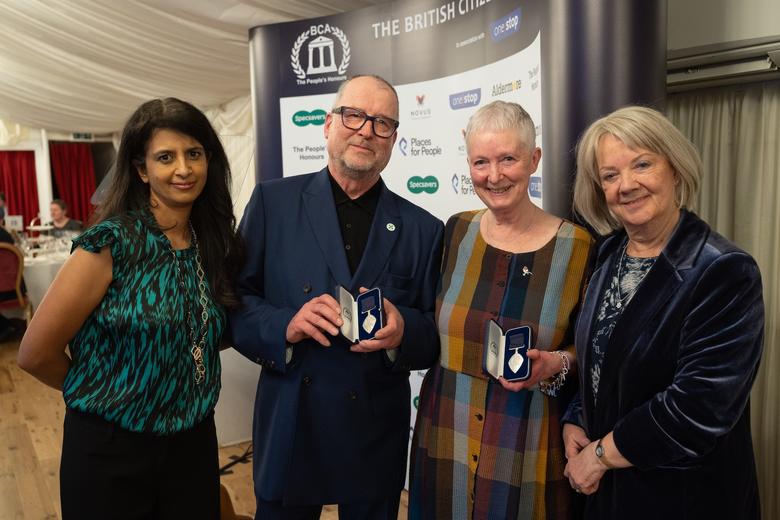
CHRIS MITCHELL
CHRIS MITCHELL
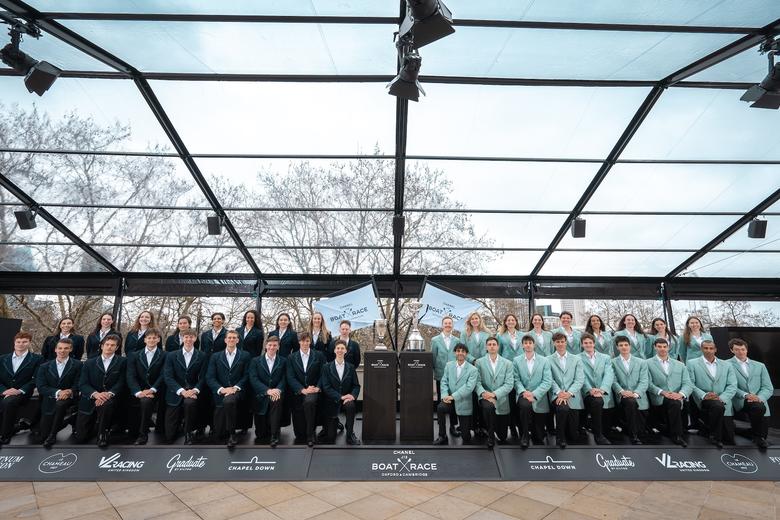
BOAT RACE CREWS ANNOUNCED
BOAT RACE CREWS ANNOUNCED
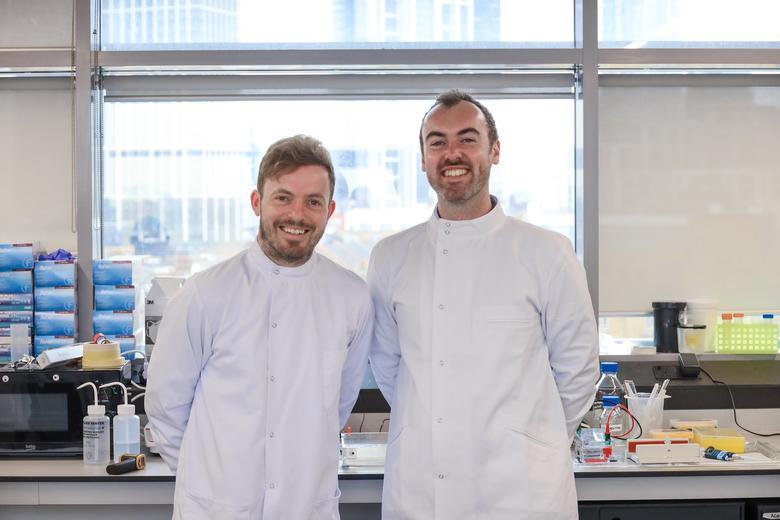
MARK WILKINSON
MARK WILKINSON
Pause slideshow

