

DEGREES WORTH IT AFTER ALL

Mortar boards in the air, against a bright orange background

DEGREES WORTH IT AFTER ALL

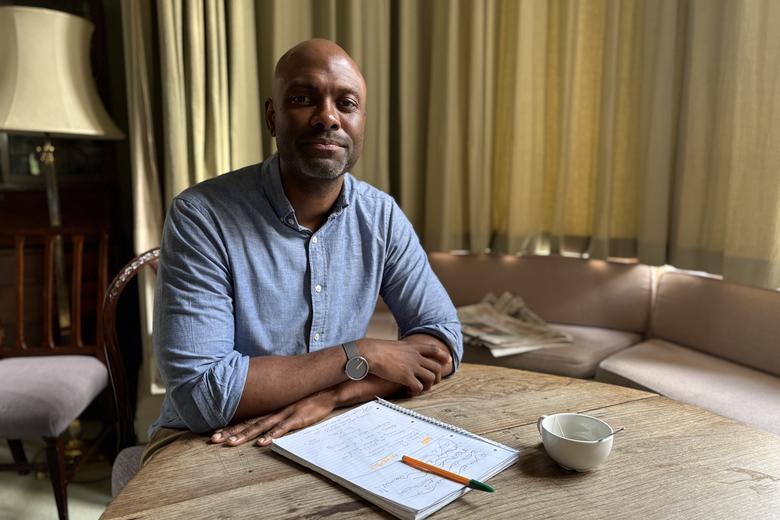
The head of Oxford Careers Jonathan Black encourages a positive outlook for recent leavers

Published: 10 August 2026

Author: Richard Lofthouse


Share this article

There’s been a sustained media theme contending that even getting a degree is a waste of time. Too late if you are graduating from Oxford in 2026, but would Oxford’s current and recent leavers have preferred to take Reform Education spokesperson Suella Braverman’s advice and get a minimum wage job aged 16-18?

She’s not entirely wrong and McDonald's features in what follows.

But we wager that very few Oxford graduates would prefer not to have gone to university, if only for the biological consideration that you experience a neural peak age 16-25, and getting a degree is a strong way to celebrate it.

That point is made by Jonathan Black, who says that one of his aims is to ‘reduce anxiety among leavers’.

He calmly addresses the worries one by one. The statistics for who’s working where, fifteen months after graduation, have recently been released for the 2023-24 leavers. He says that overall employment or further study rates have dipped 0.4% from the previous cohort, at 94% instead of 94.4% for the 2023-24 cohort. The national figure is is a still-impressive 87%, but it's lower than at Oxford. This suggests that an Oxford degree gives you the edge you might hope for.

Regarding the 0.4% dip, Black says, ‘This is not in my view because of AI. It has more to do with the broader economy.’

It is also insignificant in the larger scheme of things.

‘The big pattern was a drying up of roles during COVID, a big boom after COVID, and then a settling down to approximately 5,000 vacancy lines a year being advertised on the Oxford platform, this year barely different to last.’

That also means that to date, there has not (yet) been an AI-induced carnage.

The latest results from the Graduate Outcomes Survey of 2023-24 leavers paint a clear and reassuring picture: most students move quickly into work, further study, or other meaningful next steps, and they do so at rates that compare very strongly with other leading universities.

A majority of graduates go directly into employment and most of these roles are high-skilled positions that make use of the knowledge and skills developed during their degree. These roles span a wide range of sectors, from finance, consulting and law, to technology, research, public service and the creative industries.

Unemployment rates for the 2023-24 Oxford leavers is around 5% for undergraduates and 2% for graduates, but some of this is obscured by freelance and entrepreneurial activity.

Going back to artificial intelligence, so far it has been an emerging employment sector for Oxford graduates rather than a threat.

Students’ career interests are constantly evolving. Some areas remain consistently popular, including academia and higher education, government and public services, and scientific research. However, there has been particularly strong growth in interest in technology, AI, and data-related careers, alongside a rapid rise in interest in the creative industries. At the same time, interest in starting a business has plateaued over the past decade.

Does that mean that the media outcry is bogus? One recent bout of critique arose from think tank Policy Exchange’s data suggesting that half of all graduates in the UK were earning more than the median national wage five years after leaving university. 

Policy Exchange were cited by one newspaper as saying that their report showed a ‘wholesale collapse in outcomes, standards and the graduate premium’ following ‘mass expansion and marketisation’ of higher education.

Jonathan Black doesn’t dispute the findings as such, saying that there has naturally been a form of ‘dilution’ as the sector expanded hugely over the past three decades and suggesting that the sweet spot for degrees (on a purely financial basis) might be around 33% of school leavers going to university rather than the current 50%. Going to university does not suit everyone.

But his further point is that Oxford has not featured in this ‘collapse’, that too many employers are requesting graduates for roles that don’t actually require that level of qualification, and that older forms of the apprenticeship system that were normal 50 years ago have been lost, to the great detriment of the broader economy and many young adults for whom an apprenticeship might have been a better fit than a degree.

That said, he also resists the move of some universities towards mandatory work experience that is dished up to students, and the forced march towards ‘embedding employability’ in the actual degree courses offered.

‘That goes too far in the other direction. Oxford Careers will lay the table, but we won’t direct anyone to eat one dish rather than another.’

That also means being very proactive about forwarding your own interests, and also, he says, being ready to ‘game’ the AI screening process that will likely lie on the other side of your first applications, the point being to get to the point where you talk to or meet a human being and then apply more traditional means of persuasion.

The other side of this is very encouraging, he reports, with employers already tiring of the algorithm game and re-engaging with face-to-face career fairs.

He says for similar reasons, some Oxford colleges also wish to return to in-person interviewing for prospective students.

In one horror story, Black says that an employer noticed a Zoom interviewee requesting that the question be restated. This was because they were playing for time and hoping their AI set-up could comprehend the question and furnish a fast and convincing answer. Such a situation is highly unlikely to produce a good outcome for either side.

But let’s go back to Suella Braverman’s contention to the Daily Mail that the universities system is ‘rigged’, and that students are ‘wasting three years of their lives to get massively into debt, while we have a chronic shortage of nurses, builders and care workers’.

The grain of truth there is that no one at Oxford should think that any form of employment is ‘beneath them’, and a big problem is that casual employment in school holidays before going to university has dried up or been actively avoided.

Black again: ‘Employers report a lack of digital and AI skills amongst graduates, but more worrying is their report that Oxford applicants’ ability to demonstrate commercial and social awareness is relatively weak.’

Some of these skills, or awareness, used to be filed under common sense.

He tells some great stories.

In one case a recent graduate got a menial job driving guests around a film-making venue. It gave him invaluable insights that helped him to climb up into that world himself. In another case, a chap pulled pints at a London pub that led to a conversation with a customer that led to working a shift at a national newspaper. In perhaps the most memorable story, a young woman got a placement at Disney in the US that was almost impossible to attain, and when asked why it had been given to her rather than innumerable, equally qualified applicants, the answer that came back was: ‘we liked that she had worked at McDonalds'…as well as having an Oxford degree.’

Take that last story to heart because several points are being made at once. You have to take a proactive stance; you need a point of difference; a big corporate employer even for a menial job such as burger flipping will give you massive social and commercial awareness – and furnish proof to other employers that you’re grounded in certain realities that do not come directly from having a degree.

The ultimate point might be that you will want to speak the language and culture of the sector you want to enter. If it’s an American corporate then show them you get it. If it’s a non-profit social venture then show that you get that.

Black’s last point is that ‘a degree is only a ticket to the game. Ahead you have 2,500 weeks of employment ahead. We are here to help leavers and alumni think strategically about their whole lives. You are not a prisoner to your first role and you have time in hand.’

That’s why the ‘Careers Service’ has renamed itself ‘Careers, University of Oxford’, he explains.

‘We’re more than a "service" and we’re not here just to look over your CV (though we will do that too). We want each and every leaver to attain high-level strategic insight. We’re here to accelerate that, and we’re here to reduce anxiety. The message is: you’re going to be brilliant but you will have to take the initiative too.’

Recent Oxford career trends and graduate outcomes.

Oxford's entrepreneurship hub (EnSpire Oxford).

About the Dear Jonathan column
For six years, Oxford University Careers Service Director Jonathan Black wrote a fortnightly column for the Financial Times answering readers' career questions. The Financial Times Dear Jonathan archive is still available.

Now, the Dear Jonathan column has come to Oxford.

If you are an Oxford University student, send in your career question to dear.jonathan@careers.ox.ac.uk and each week of term, he will answer one of the questions in this feature. He will anonymise the author (but please tell him whatever is relevant) so you can be sure that readers won’t know it’s you.