
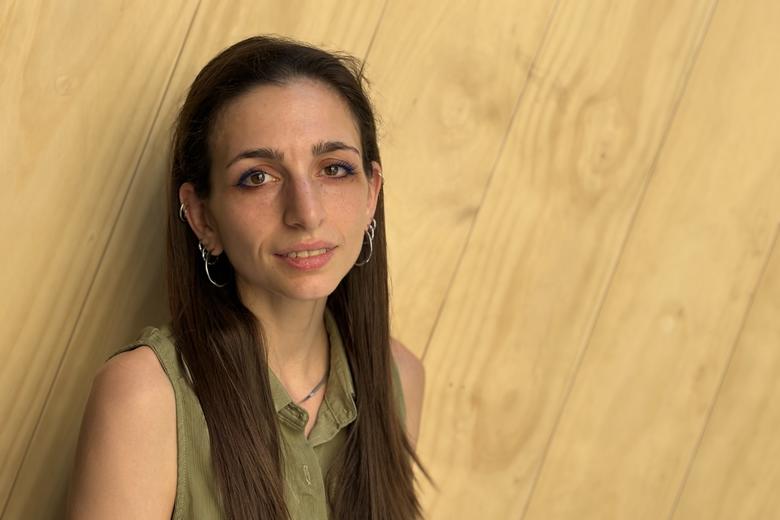
ELLA BARON
ADAM SMITH
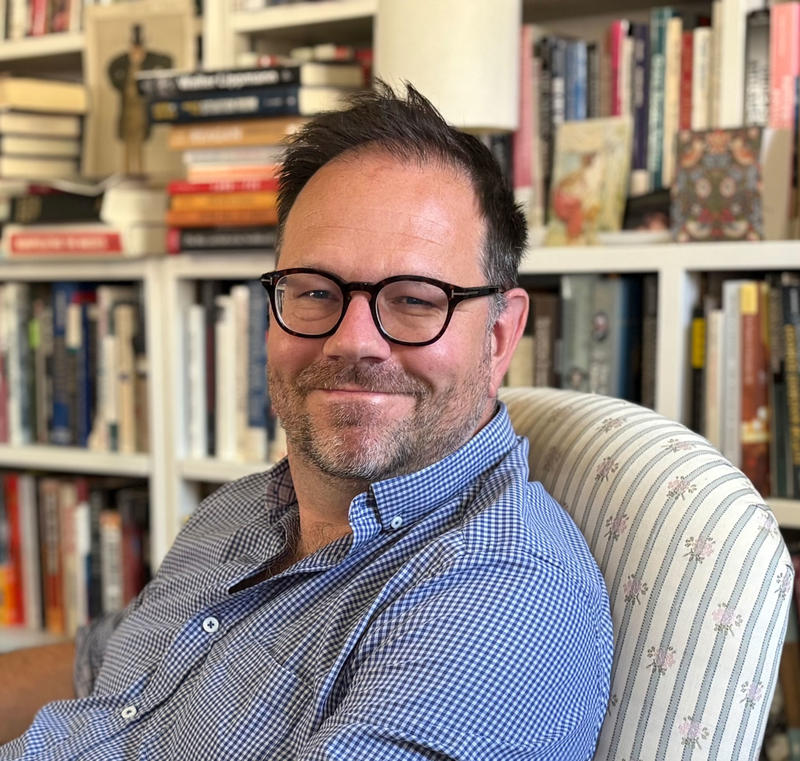
Right at the end of a wide-ranging interview Professor Smith makes a subtle point about the distinctiveness of US culture when he was a child growing up in the northern, English city of Durham, versus what he observes his three adolescent daughters experiencing in 2026.
‘When we watched The Dukes of Hazzard we knew it was American. There were cultural boundaries in place and they were obvious. Now, it’s far less clear. In one way we might think of the US today as news headlines such as school shootings, ICE border patrols and political turbulence. But in another sense, the vocabulary, even the intonation, seep straight through TikTok and Instagram to the eyes and ears of my daughters – popular culture, hashtag Black Lives Matter, hashtag Me Too…it’s instant and normative and global.’
The resulting dissonance – which is the true America? – he argues is a founding purpose of the Rothermere American Institute (RAI), expressed as research and debate about the US, but from outside the US and therefore with a critical benefit of distance. Based in a truly splendid contemporary building at 1a South Parks Road, it celebrates its quarter century in 2026, coinciding with the 250th anniversary of the Declaration of Independence on 4 July.
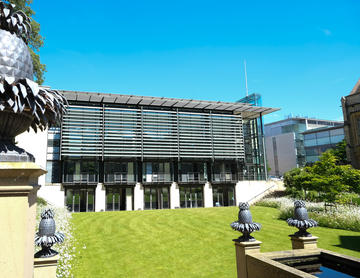
‘In its 25 years of existence there has never been a moment when anyone questioned our purpose. 9/11 followed just four months after former President Bill Clinton opened us in 2001. But in 2026 there is so much noise, so much ‘instant everywhere on’ and cacophony, I cannot think of a stronger moment in which to restate the value of a thoughtful, long perspective rooted in scholarship. Also, America is not going to stop being the most consequential country in the foreseeable future. It might be in a hundred years but not in my lifetime. It’s never going to not matter massively! That’s everything from European defence policy to culture and space and AI, never mind politics and historical legacy.’
Director of the Rothermere Institute since 2019 and a Professorial Fellow of University College, there has never been a moment when Smith has doubted his mission, which he refers to more than once as ‘holding the middle ground’.
‘There are the ‘outraged at Trump’ academics who would have RAI become a sort of fortress for dissidents, but if that became all we were, we’d be the weaker for it. We are here to understand, to study, to root everything in scholarship, in evidence, in strong argument. Not every school and university in the US has held that line – there are academics I know who have gone full partisan, which may be understandable in such a highly charged, polarised environment, but that is not Oxford. The additional pay-off is the uniqueness of the Rothermere: that we are in Britain. That distance is golden. It gives us the outsider perspective, it also allows US students and scholars to visit, to talk about other political traditions, perhaps especially the English experience of civil war and those founding arguments that were later encoded in the US.’
Smith is fond of citing CLR James’s famous line about cricket, adapted thus: ‘what does he know of America who only America knows?’ Whether in the annual Esmond Harmsworth lecture or the revolving Winant and Harmsworth Chairs, the RAI operates partly as a hub for visiting US academics, who invariably report that they made great progress in a congenial setting.
Current research
Aside from being partisan, the other danger, of course, would be for the RAI to pull the wool over the collective eyes and ears; to build an ivory tower. That’s not an option either, attractive as it might appear.
‘In an oblique way, there is absolutely contemporary relevance to the work we are doing: all historical inquiry proceeds by reference to our own standpoint, our own moment.’
One significant, three-year long research inquiry led by Smith is the Leverhulme-sponsored ‘Conservatism in an Age of Atlantic Revolutions, 1830-1880’.
‘We take the long 19th century; we don’t even get as far as Roosevelt’s New Deal, let alone today. But the questions we have asked are absolutely fascinating. The word ‘conservative’ quickly gained currency everywhere in the 1830s, I mean in many countries, not just the United States... ‘Conservatism in an Age of Atlantic Revolutions, 1830-1880’ is simply asking why that happened.
‘Part of the answer is that government was becoming popular and the world was changing rapidly, whether viewed as technology, or as migration, or as economic change. The term ‘conservative’ could be cover for radical change but beyond that it meant defining values held dear and which would be worth defending and cherishing.’
He explains that too often in the past the term ‘conservative’ has assumed a fixed meaning ‘and becomes a history of one baddie or goodie after another, arriving at now. That’s simply not good enough… It has never had a fixed meaning.’
Smith is the Principal Investigator for the project, flanked by two post-doctoral fellows Gwion Wyn Jones and Robin Bates.
Early career
Matriculating to St Anne’s College in 1991, Professor Smith attributes part of his initial interest in the US to the influential tutor and Oxford historian Lawrence Goldman. ‘He was a terrific tutor, and he still helps us now with some of our work at the Rothermere, as an emeritus, and he’s still terrific.’
He later got to work as a visiting researcher at Harvard, coming back to Oxford in 2019 from University College London, which offers the Institute of the Americas, another British academic hub with the US on its radar, but in UCL’s case extending to Canada, Latin America and the Caribbean.
‘There are several answers as to why I loved this subject. I suppose the most basic is that I was captivated by the energy of America. I had a colourful uncle who we visited when I was a child. He lived on Staten Island. He had emigrated. He was gay and wanted to live his life. That was powerful. I was always captivated by the energy of America. It was downright exotic if you came from a comprehensive school in Durham.’
Rooted in the study of the American Civil War, Professor Smith’s research career has led him most recently to publishing the book Gettysburg, part of a Great Battles series by Oxford University Press edited by former Oxford historian Hew Strachan.
‘This was enormous fun but it was delayed a bit by COVID. I spent several weeks in archives at Gettysburg, also interviewing some of the battlefield guides. The thing to remember is that this site has become sacred ground. Biden went there; Trump went there. Everyone battles still over what it meant, what it means, and of course Abraham Lincoln’s famous Gettysburg Address. There are numerous Confederate memorials there. They have been taken down in other places but not at Gettysburg. I do address the actual three days of the battle but the bulk of the book is about the meaning of the battle in the American imagination since 1863. That’s the true history of Gettysburg.’
Books and podcasts
His next book is already well underway – it will arise from a lecture series he will deliver at Pennsylvania State University in 2027, about trans-national political ideas in the 19th century, partly building out from the Leverhulme research.
‘Another work I’m very keen to write is a trade book for a wider public that would deliver the narrative of the podcast I began.’
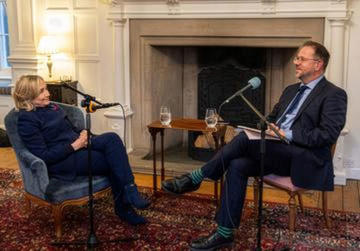
The podcast is titled ‘The Last Best Hope: Understanding America from the Outside In?’ which is originally an Abraham Lincoln reference to the United States as exceptional; the central plank of what is referred to as ‘American exceptionalism’, that has waxed and waned ever since.
Professor Smith says that he began the podcast in his bedroom in lockdown (‘it was difficult to obtain a microphone because I think everyone was setting up a podcast at that moment!’). He adds that his family had just moved into temporary, rented accommodation in Oxford, in a modern development near Port Meadow. There wasn’t a lot of room.
But the podcast caught fire and has had nearly a million downloads today, each academic term spawning a new series of four to six episodes, covering the widest range of topics, from the history of soccer in the US to the meaning of Lincoln’s Gettysburg Address and indeed the meaning of the looming 250th anniversary on 4 July of the Declaration of Independence.
‘The way we are tackling this [4 July 2026] is by asking how 2026 and the 250th will be different to the bicentenary that was celebrated in 1976. That’s quite nice because the earlier date is still well within living memory but might as well have been a different planet.’
Does he evince the same sort of hopes he nurtured as a younger man? ‘Yes, call me an old romantic in that sense. I feel the hope. Everyone falls short of their ideals but if we didn’t have America as a light, we might feel the need to invent it. American idealism is great. That is not to be confused with Obama’s moral arc tending towards justice, or some such – I don’t believe at all in that notion of inevitable progress. The world is endless struggle, unintended consequences, this way and that; all at once, all the time.’
He says that the podcast has cemented his public, media-savvy side, referencing various documentaries he’s made for BBC Radio in the past. ‘I’ve always loved radio and the spoken voice, and I remain very curious. The podcast isn’t at all me proclaiming, except for odd occasions where I happen to know something; for the most part it works best when we have half a dozen voices and we’re all trying to make sense of a topic together, openly, the documentary approach.’
The podcast is supported by philanthropist Tom Amraoui and has enabled Professor Smith to hire a professional producer Emily Williams, and to remain non-commercial.
Spiky current affairs
We move to the thorny subject of political attacks on the independence of American schools like Columbia and Harvard by the Trump administration.
‘It was a premeditated move to take on Harvard, and in some ways it was politically savvy of Trump because it played to his base. There was Federal money involved so it was easy to threaten to withhold it. In some ways Harvard is very diverse and progressive but not always in respect of class; there is a class element to the Trump attack. Of course, the attacks were an outrage. But it is better to try and understand what happened there than to merely be outraged.’
Coming back to Oxford, he expresses profound hope that it can continue to avoid the kinds of culture war battles that are roiling American campuses.
‘We do not have this problem in Oxford. The potential problem Oxford has is how it fares and how it is perceived relative to the rest of the higher education sector here in the UK. There is a growing disparity of resource, with Cambridge and Oxford pulling far ahead of even the Russell Group peers.
‘The other lesson to learn from the US is that were Britain to get a populist government, it would be as well for Oxford to have already obtained popular support.
‘What we must not do is become a coterie of the cognoscenti, with a thinly veiled contempt for people who disagree with an often unstated or invisible agenda. We’re here to understand multiple points of view.’
He reiterates his leadership responsibility as Director of the Rothermere, speaking for the vast majority of his academic colleagues who ‘do not see themselves fighting a culture war either on one side or the other… they are doing excellent work and teaching students to think critically and make up their own minds, based on evidence and hard work.’
What’s happening at the RAI
There is a lot going on at the Rothermere Institute. He mentions the ‘extremely productive relationship’ that the RAI has with Missouri University’s Kinder Institute, that currently enables a vibrant study abroad program to take place.
Smith also notes the launch of a new MSc in US Politics in 2028, made possible by the endowment of the Churchill Chair. There is the possibility of a further expansion at the master’s level in conjunction with the Kinder Institute, but that lies somewhat down the road.
After spending a month at the RAI in the summer of 2025, the students from Missouri spoke eloquently about the powerful intellectual stimulus of their study abroad programme in Oxford, when they lived at Corpus Christi College and undertook numerous lectures about the constitutional history and legacies of the English Civil War and Glorious Revolution, plus museums, material culture, public policy and political communication. Studded of course with visits to Westminster and Whitehall, Bath and Hampton Court Palace.
Perhaps most exciting is a newly endowed post, the Churchill Associate Professorship in US Politics, whose first incumbent will take up their post for the 2026/27 academic year, as a fellow of The Queen’s College.
The institute is powered by free coffee and funded by philanthropy – another substantial and cherished partnership being with the Association of American Rhodes Scholars, who with RAI recently created a series of online lectures on African American culture and history, named after the first African American Rhodes Scholar Alain Locke.
As Professor Smith expressed it in the latest annual report of the institute, ‘These are troubled times, and the United States is more than ever the focus of global attention. In the year to come, the RAI will continue to play our part in supporting world-leading research, convinced, as we are, that our mission is as valuable now as at our founding.’
move to carousel movement controls
 Pause slideshow
move to carousel content
Pause slideshow
move to carousel content

THE IMPORTANCE OF VACCINE ADVOCACY
THE IMPORTANCE OF VACCINE ADVOCACY
SILICON VALLEY CAREER TALK
SILICON VALLEY CAREER TALK

DEGREES WORTH IT AFTER ALL
DEGREES WORTH IT AFTER ALL

OFF THE SHELF: AUGUST 2026
OFF THE SHELF: AUGUST 2026
THE RISE OF BACTERIAL RESISTANCE FROM POULTRY FARMS
THE RISE OF BACTERIAL RESISTANCE FROM POULTRY FARMS
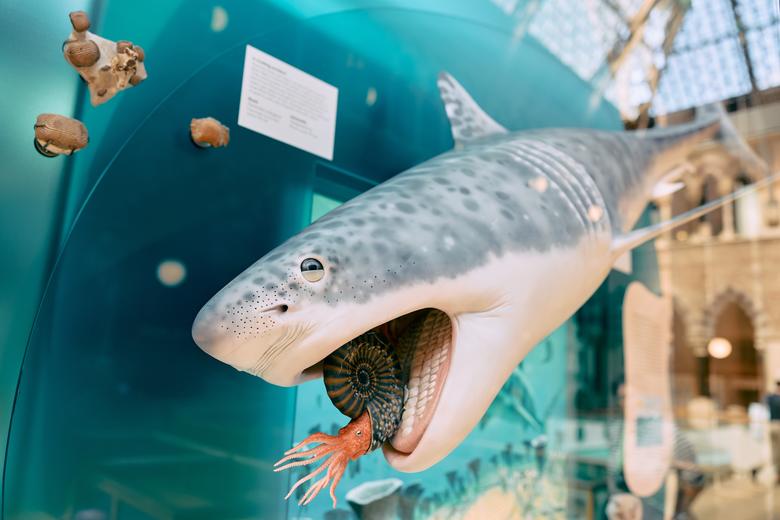
NATURAL HISTORY AT OXFORD REVAMPED
NATURAL HISTORY AT OXFORD REVAMPED

OFF THE SHELF: JULY 2026
OFF THE SHELF: JULY 2026
MALACHI MCINTOSH
MALACHI MCINTOSH
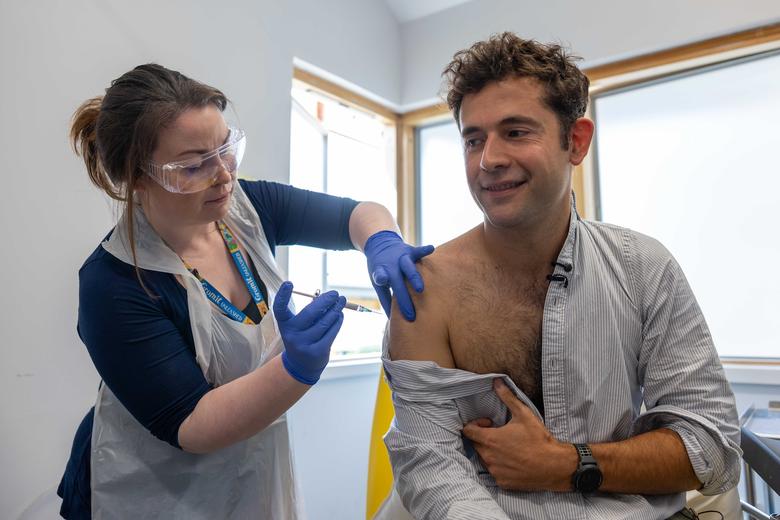
EBOLA: FIRST VACCINATION
EBOLA: FIRST VACCINATION
GRAPPLING WITH THE GHOSTS OF CARIBBEAN COLONIALISM
GRAPPLING WITH THE GHOSTS OF CARIBBEAN COLONIALISM
CONSERVATION AND WAR STUDIES JOIN HANDS
CONSERVATION AND WAR STUDIES JOIN HANDS
Pause slideshow

